Sabudana Face Mask for a Smooth, Hydrated-Looking Glow
If you are looking for a simple homemade skincare recipe that uses an inexpensive pantry ingredient, this sabudana face mask is an interesting option to try.
Made with soaked tapioca pearls and water, the mixture develops a soft, gel-like consistency that can be spread over the skin as a short-contact face mask.
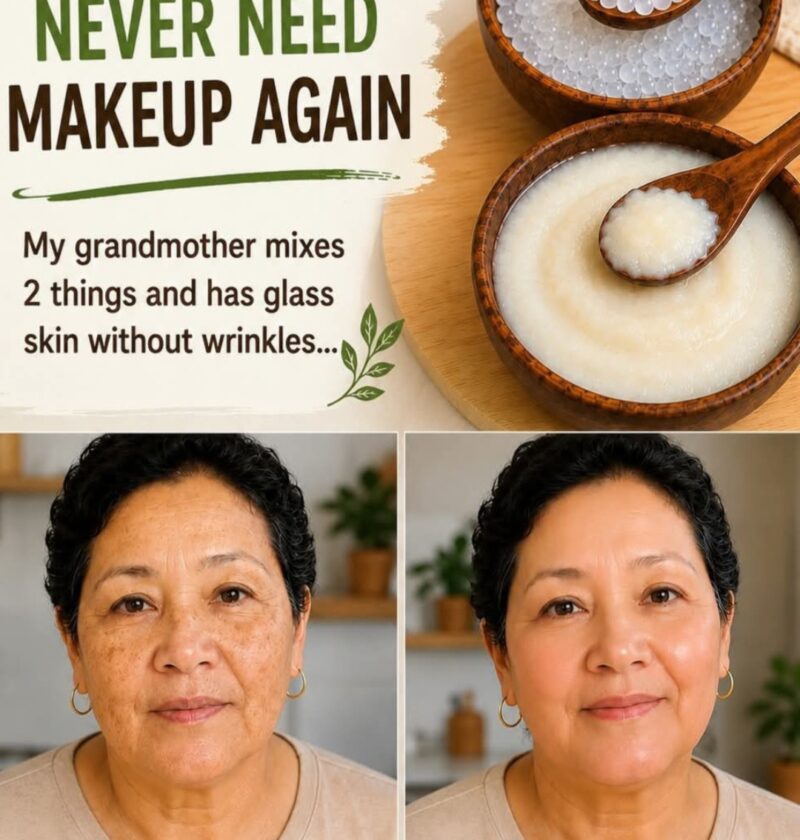
The image that inspired this recipe makes dramatic claims about “glass skin” and wrinkles.
Those claims should be treated as beauty-marketing claims rather than established medical facts.
A homemade sabudana mask may leave skin feeling temporarily softer and more hydrated, but there is no good evidence that it can permanently remove wrinkles or replace makeup.
For long-term anti-aging skincare, dermatologists emphasize daily broad-spectrum SPF 30 or higher, moisturizer, and appropriately selected evidence-based skincare products.
Recipe Overview
| Detail | Information |
|---|---|
| Recipe | Sabudana Face Mask |
| Main Ingredient | Sabudana (tapioca pearls) |
| Preparation Time | 5 minutes |
| Soaking Time | 30–60 minutes |
| Cooking Time | 5–8 minutes |
| Cooling Time | 15–20 minutes |
| Total Time | About 1 hour |
| Yield | About 2–3 facial applications |
| Application | Face and neck, avoiding the eye area |
| Skin Feel | Soft, smooth, hydrated |
| Difficulty | Easy |
| Best For | Normal, dry, or combination skin |
| Storage | Refrigerate and use promptly |
Why You’ll Love This Recipe
This homemade sabudana face mask is inexpensive, uncomplicated, and requires only a couple of basic ingredients.
The cooked tapioca develops a naturally thick, slippery texture that makes it easy to apply as a gentle rinse-off mask.
The biggest appeal is its simplicity. You do not need expensive skincare products or specialized equipment to prepare it.
If your goal is a temporary feeling of softness and hydration, this can be an enjoyable addition to a simple skincare routine.
It is important, however, to keep expectations realistic.
Dermatologists note that moisturizer can temporarily plump the appearance of fine lines by increasing water in the skin, while exaggerated promises of dramatically younger-looking skin overnight are unrealistic.
Ingredients
For the Sabudana Gel
| Ingredient | Amount | Purpose |
|---|---|---|
| Sabudana (tapioca pearls) | 2 tablespoons | Creates the gel-like base |
| Filtered or distilled water | ½ cup | Soaking and cooking liquid |
Optional Moisturizing Addition
| Ingredient | Amount | Purpose |
|---|---|---|
| Plain fragrance-free facial moisturizer | A small amount, after rinsing | Helps reduce dryness |
Important: Keep the basic recipe simple. Avoid adding lemon juice, baking soda, essential oils, toothpaste, or other potentially irritating household ingredients to a homemade facial mask.
Step-by-Step Instructions
1. Rinse the Sabudana
Place 2 tablespoons of sabudana in a small bowl and rinse it gently with clean water. Drain thoroughly.
2. Soak the Tapioca Pearls
Add the rinsed sabudana to ½ cup of filtered or distilled water. Allow it to soak for approximately 30–60 minutes, or until the pearls have softened.
3. Cook the Mixture
Transfer the soaked sabudana and its water to a small saucepan. Cook over low to medium-low heat for about 5–8 minutes, stirring frequently.
The pearls should become translucent and the surrounding liquid should become noticeably thicker and more gel-like.
4. Cool Completely
Remove the saucepan from the heat and allow the mixture to cool for approximately 15–20 minutes.
Never apply hot or warm-hot gel directly to your face. The mixture should feel comfortably cool or lukewarm before application.
5. Blend for a Smoother Texture
For a smoother face mask, transfer the cooled mixture to a clean blender and blend briefly until it reaches a relatively uniform consistency.
If it is too thick to spread comfortably, mix in a few drops of clean water.
6. Perform a Patch Test
Before applying the mask to your entire face, test a small amount on an inconspicuous area of skin. The American Academy of Dermatology recommends testing skincare products before applying them broadly, even products marketed as gentle or hypoallergenic.
7. Apply the Mask
Cleanse your face with a mild cleanser and gently pat dry.
Apply a thin, even layer of the cooled sabudana gel to the face, avoiding the eyelids, lips, nostrils, and areas of broken or irritated skin.
8. Leave It On Briefly
Allow the mask to remain on the skin for approximately 10–15 minutes.
There is no need to allow it to dry until the skin feels tight or uncomfortable.
9. Rinse Thoroughly
Rinse your face with lukewarm water and gently remove the remaining gel with your fingertips.
Do not scrub aggressively.
10. Moisturize
Pat your face dry with a clean towel and apply a gentle, fragrance-free moisturizer.
If you are going outdoors afterward, finish your skincare routine with a broad-spectrum SPF 30 or higher sunscreen. Daily sun protection is one of the most important steps for preventing premature skin aging.
Best Tips
The consistency is the most important part of this recipe. If the sabudana is undercooked, the mixture can remain watery and difficult to spread.
If it is overcooked, it may become excessively sticky. Low, gentle heat and frequent stirring give you better control.
Always allow the mixture to cool completely before applying it to your face.
Your skin does not benefit from excessive heat, and a hot homemade preparation can cause irritation or burns.
For a more comfortable experience, apply a thin layer rather than a thick coating.
A thick mask does not necessarily provide better skincare results and can simply become more difficult to remove.
If your skin starts stinging, burning, itching, or becoming noticeably red, rinse the mask off immediately and discontinue use.
Dermatologists advise stopping skincare products that irritate the skin unless they have been specifically prescribed for you.
Best Ingredient Options
For the best homemade preparation, use plain unflavored sabudana or tapioca pearls without added colors, flavors, sugar, or other ingredients.
Filtered or distilled water is a practical choice for a DIY facial preparation. If using tap water, make sure it is clean and safe for drinking.
A fragrance-free moisturizer is a better finishing product than adding numerous active ingredients directly to the homemade mask. Keeping a skincare routine simple can also help reduce unnecessary irritation.
Recipe Variations
For dry-feeling skin, you can keep the mask particularly soft and follow it with a gentle moisturizer after rinsing.
This gives you a simple hydrating skincare routine without unnecessarily adding multiple ingredients to the homemade preparation.
For combination skin, apply a thin layer primarily to areas that feel dry rather than covering the entire face with a thick coating.
If your skin is sensitive, the safest variation is actually to simplify the recipe rather than add more ingredients. Avoid fragrance, essential oils, citrus juice, and abrasive powders.
What to Use With This Face Mask
This is a skincare recipe rather than a food recipe, so there is nothing to serve with it. Instead, pair it with a simple skincare routine consisting of gentle cleansing, moisturizing, and daily sun protection.
For people concerned about wrinkles, dark spots, or premature skin aging, dermatologist-recommended products may be more appropriate than relying exclusively on DIY masks.
Retinoids and retinol, for example, are established topical ingredients used for concerns including fine lines, wrinkles, uneven skin tone, and texture.
Make-Ahead Instructions
You can prepare the sabudana gel ahead of time, but making a small fresh batch is preferable for a homemade facial preparation.
If preparing ahead, transfer the completely cooled mixture into a clean, covered container and refrigerate it promptly.
Always inspect the mixture before use. If it develops an unusual odor, appearance, or texture, discard it rather than applying it to your skin.
Storage
Because this recipe contains water and has no professionally formulated preservative system, it should not be treated like a commercially manufactured skincare product.
Keep any leftover mixture covered and refrigerated and use it as soon as practical. For the most cautious approach, prepare a fresh batch each time rather than storing homemade skincare for extended periods.
Do not leave the prepared gel sitting at room temperature for long periods.
Reheating
Do not reheat the mask for application.
Instead, remove the refrigerated preparation and allow it to come to a comfortable temperature naturally. Test the temperature before applying it to your face.
Heating and cooling homemade skincare repeatedly is unnecessary and can make safe storage more difficult.
Freezing
Freezing is not recommended for this face mask.
The texture can change after freezing and thawing, and homemade skincare does not have the same preservation and stability testing as commercial cosmetic products.
Making a small quantity is a better option.
Common Mistakes to Avoid
One common mistake is applying the mask while it is still hot. Always allow the cooked mixture to cool completely before it touches your skin.
Another mistake is leaving the mask on for an excessively long period. A longer application does not automatically mean better skincare results. Ten to fifteen minutes is sufficient for this simple rinse-off treatment.
Do not scrub the face aggressively when removing the dried gel. Excessive rubbing can irritate the skin and make redness more noticeable.
Avoid turning this simple recipe into a mixture of numerous kitchen ingredients. Lemon juice, baking soda, undiluted essential oils, and abrasive substances can be particularly problematic for facial skin.
Finally, do not use this mask as a substitute for sunscreen or evidence-based anti-aging skincare. Sun exposure is a major contributor to premature skin aging, and dermatologists recommend broad-spectrum SPF 30 or higher as part of daily skin protection.
Nutrition Estimate
Because this preparation is intended for topical use and is not consumed, nutritional values are not applicable.
| Nutrition | Estimate |
|---|---|
| Calories | Not applicable |
| Protein | Not applicable |
| Carbohydrates | Not applicable |
| Fat | Not applicable |
| Fiber | Not applicable |
| Sugar | Not applicable |
| Sodium | Not applicable |
Frequently Asked Questions
Does a sabudana face mask really remove wrinkles?
There is not enough reliable clinical evidence to say that a homemade sabudana mask removes wrinkles. The smooth appearance shown in social-media-style before-and-after images should not be interpreted as proof of a permanent anti-aging effect.
For established wrinkle-care strategies, dermatologists recommend sun protection, moisturizer, and appropriately selected active skincare products.
Can sabudana give you glass skin?
It may temporarily make the skin feel smoother or more hydrated, but “glass skin” is a beauty term rather than a medical diagnosis, and there is no guarantee that this mask will produce that appearance.
How often can I use this face mask?
If your skin tolerates it, you could use it occasionally rather than making it a daily treatment. Stop if you experience redness, itching, burning, or irritation.
Is this suitable for sensitive skin?
Not necessarily. Natural or homemade does not automatically mean irritation-free. People with sensitive or reactive skin should patch-test first and avoid applying the mask to compromised skin.
Can I leave sabudana gel on overnight?
I would not recommend using this homemade mixture as an overnight mask. A short-contact application followed by rinsing is a simpler and more cautious approach.
Can I use it around my eyes?
No. Avoid the eyelids and immediate eye area. If the mixture accidentally gets into your eyes, rinse thoroughly with clean water.
Can this replace moisturizer?
No. If your skin feels dry after rinsing, use a properly formulated facial moisturizer.
Dermatologists specifically recommend moisturizer as an important component of an anti-aging skincare routine because it helps trap water in the skin and can make fine lines appear less noticeable.
What is better for preventing wrinkles: this mask or sunscreen?
Sunscreen. Daily broad-spectrum SPF 30 or higher is one of the most important measures for protecting skin from UV-related premature aging.
Final Thoughts
This simple sabudana face mask is an inexpensive DIY skincare treatment that can be fun to experiment with if you enjoy homemade beauty recipes.
Its soft, gel-like texture may leave your skin feeling temporarily smooth and hydrated, but it should not be presented as a proven treatment for wrinkles, pigmentation, or other skin conditions.
The viral claim that a homemade mixture can make you “never need makeup again” is much stronger than the available evidence supports.
For a genuinely effective skin care routine, focus on gentle cleansing, moisturizer, daily sun protection, and evidence-based ingredients selected for your particular skin concerns.
Dermatologists also emphasize having realistic expectations from anti-aging products because no cream or homemade mask can reproduce the results of professional cosmetic procedures.
⚠️This recipe may not be suitable for everyone, so it is advisable to consult a doctor.
If you have persistent acne, eczema, unexplained pigmentation, significant irritation, or rapidly changing skin lesions, a dermatologist can help determine the appropriate treatment rather than relying on a homemade mask.