Hibiscus, Avocado Seed & Clove Wellness Tea
Introduction
This vibrant ruby-red herbal tea combines hibiscus, avocado seed, and whole cloves into a tart, aromatic drink. It can be served warm or chilled and makes an interesting addition to a balanced wellness routine.
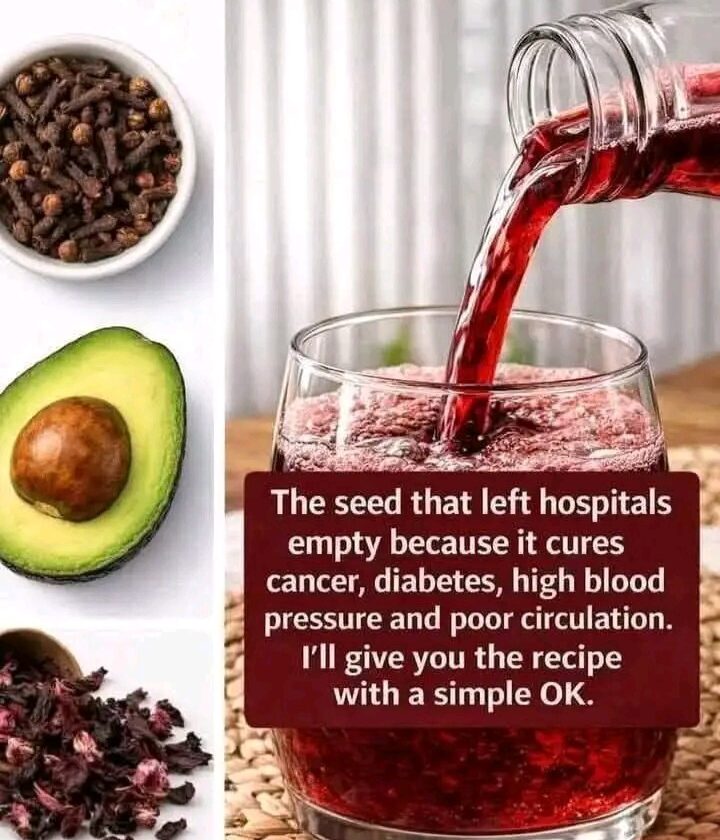
The image claims that this drink can cure cancer, diabetes, high blood pressure, and poor circulation. Those claims should not be presented as medical facts. There is some human research suggesting that hibiscus tea may modestly lower blood pressure, but studies do not establish that it cures hypertension, diabetes, cancer, or circulation problems.
Avocado seed is also very different from eating avocado flesh. A scientific review notes that avocado seeds contain various phytochemicals and antinutrients and that the seed is generally considered inedible; human evidence establishing the safety and health benefits of drinking avocado-seed preparations is limited.
For that reason, this recipe is best treated as a herbal beverage, not a medicine or replacement for prescribed treatment.
Recipe Overview
| Category | Details |
|---|---|
| Recipe Name | Hibiscus, Avocado Seed & Clove Tea |
| Prep Time | 10 minutes |
| Simmering Time | 10–15 minutes |
| Steeping Time | 10 minutes |
| Total Time | About 30–35 minutes |
| Yield | 4 cups |
| Servings | 4 |
| Difficulty | Easy |
| Flavor | Tart, fruity, earthy, and aromatic |
| Best Served | Warm or chilled |
| Main Ingredients | Hibiscus, avocado seed, cloves |
| Cuisine Style | Herbal wellness beverage |
Why You’ll Love This Recipe
This homemade herbal tea has a naturally deep red color and a refreshing tart flavor from dried hibiscus. A small amount of clove adds warmth and aroma, while the avocado seed gives the drink a distinctive earthy character.
It is also easy to prepare. You only need a saucepan, water, a strainer, and a few simple ingredients.
For readers interested in healthy beverages, natural wellness, antioxidant-rich foods, heart health, blood pressure management, and healthy lifestyle habits, hibiscus tea is particularly interesting because it has been studied in human clinical trials.
Some systematic reviews have reported modest reductions in blood pressure with regular hibiscus consumption, although the evidence is not sufficient to call hibiscus a cure or replacement for blood-pressure medication.
Ingredients
Main Ingredients
| Ingredient | Amount |
|---|---|
| Dried hibiscus flowers (hibiscus sabdariffa) | 2 tablespoons |
| Avocado seed | ½ seed |
| Whole cloves | 3–4 |
| Filtered water | 4 cups |
| Fresh ginger | 2–3 thin slices, optional |
| Lemon juice | 1 tablespoon, optional |
| Honey | 1–2 teaspoons per cup, optional |
Important Ingredient Note
Because human safety data for avocado-seed beverages are limited, using avocado seed is optional. If you prefer a better-established herbal tea, simply omit the avocado seed and prepare a hibiscus-and-clove tea instead.
Step-by-Step Instructions
1. Prepare the Avocado Seed
Wash the avocado seed thoroughly and remove any remaining avocado flesh.
For this recipe, use ½ seed, not a whole large seed.
Slice it into very thin pieces using a sturdy knife. If the seed is too hard to cut safely, do not force the knife through it.
2. Measure the Ingredients
Measure 2 tablespoons of dried hibiscus flowers and 3–4 whole cloves.
If using ginger, prepare two or three thin slices.
3. Heat the Water
Pour 4 cups of filtered water into a saucepan.
Bring the water to a gentle boil over medium-high heat.
4. Add the Avocado Seed and Cloves
Reduce the heat to low.
Add the sliced avocado seed and cloves.
Allow them to gently simmer for approximately 10 minutes.
Keep the pan partially covered during this step.
5. Add the Hibiscus
Turn the heat off.
Add the dried hibiscus flowers and optional ginger.
Cover the saucepan and allow everything to steep for 8–10 minutes.
Avoid prolonged boiling of the hibiscus because it can produce an excessively strong and bitter drink.
6. Strain the Tea
Place a fine-mesh strainer over a heatproof pitcher.
Carefully pour the tea through the strainer, removing all plant material.
Allow the tea to cool slightly.
7. Add Lemon or Sweetener
For a brighter flavor, add 1 tablespoon of fresh lemon juice.
If the tea is too tart, add 1–2 teaspoons of honey to each cup.
You can also leave it unsweetened.
8. Serve
Serve the tea warm, or allow it to cool completely and refrigerate it for a refreshing iced herbal drink.
For an iced version, pour over ice and add a lemon slice.
Best Tips
Use culinary-grade dried hibiscus from a reputable source. Hibiscus tea is naturally tart, so you can adjust the sweetness rather than adding a large amount of sugar.
Keep the hibiscus steeping time relatively short. A very long infusion can make the beverage intensely sour and astringent.
If you are trying avocado seed for the first time, the safest approach is to leave it out. The evidence for avocado-seed consumption in humans is much less established than the evidence surrounding ordinary avocado consumption.
Most importantly, do not use this beverage to replace medication prescribed for high blood pressure, diabetes, cardiovascular disease, or another medical condition.
Best Ingredient Options
Hibiscus: Choose dried Hibiscus sabdariffa calyces intended for tea or culinary use. They should have a clean, fresh aroma and deep burgundy color.
Avocado seed: If used, choose a fresh, clean seed and use only a small amount. Because safety data are limited, omitting it is the more conservative choice.
Cloves: Whole cloves provide a pleasant aromatic flavor. Three or four cloves are enough for four cups.
Sweetener: Honey works well, but the tea can also be enjoyed unsweetened.
Lemon: Fresh lemon juice balances the tart hibiscus and makes the beverage especially refreshing when served cold.
Recipe Variations
For a simple hibiscus wellness tea, omit the avocado seed and increase the hibiscus slightly to 2½ tablespoons.
For a ginger-hibiscus tea, add 5–6 thin slices of fresh ginger during the steeping stage. This gives the beverage a warmer, spicier flavor.
For an iced version, prepare the tea normally, cool it completely, and refrigerate it for several hours. Serve over ice with lemon slices.
For a naturally fruity variation, add a small amount of unsweetened cranberry or pomegranate juice after the tea has cooled.
What to Serve With
This tart herbal tea pairs nicely with fresh fruit, oatmeal, whole-grain toast, yogurt, nuts, or a light breakfast.
For an afternoon beverage, serve it alongside a small fruit-and-yogurt bowl or a simple homemade snack.
If you are watching your sugar intake, enjoy the tea unsweetened or use only a small amount of sweetener.
Make-Ahead Instructions
Prepare the tea earlier in the day and allow it to cool completely.
Transfer it to a covered glass container and refrigerate.
For the best flavor, prepare a fresh batch rather than keeping the tea for an extended period.
Storage
Store cooled tea in a clean, covered glass container in the refrigerator.
For best quality, consume it within 24–48 hours.
Discard the tea if it develops an unusual smell, flavor, cloudiness, or visible spoilage.
Reheating
Pour one serving into a saucepan or microwave-safe mug.
Warm gently until comfortable to drink.
Do not repeatedly boil the entire batch because this can negatively affect the flavor.
Freezing
You can freeze plain hibiscus tea in ice-cube trays for use in iced beverages.
However, freezing the complete avocado-seed mixture is unnecessary. Fresh preparation is preferable, particularly because there is limited research on storing and repeatedly thawing avocado-seed beverages.
Common Mistakes to Avoid
Do not assume that a stronger tea will provide stronger health benefits. Increasing the amount of herbs does not turn a beverage into medicine.
Avoid using a large amount of avocado seed. There is insufficient human evidence to establish an appropriate therapeutic dose or long-term safety for avocado-seed tea.
Do not drink this tea while assuming it will cure diabetes, cancer, high blood pressure, or poor circulation. These are serious medical conditions requiring evidence-based evaluation and treatment.
Another common mistake is adding too much hibiscus. Excessive amounts can make the beverage extremely sour and unpleasant.
Finally, people taking medication for blood pressure or other chronic conditions should be particularly cautious. Hibiscus has shown blood-pressure-lowering effects in several clinical studies, so combining large amounts with medication could potentially affect blood pressure. Discuss regular use with a healthcare professional.
Nutrition Estimate
The following is an approximate estimate for one 1-cup serving without honey. Exact nutrition is difficult to calculate because the amount of compounds extracted from dried herbs and avocado seed varies.
| Nutrient | Approximate Amount |
|---|---|
| Calories | 5–10 kcal |
| Protein | <1 g |
| Carbohydrates | 1–2 g |
| Fat | <1 g |
| Fiber | <1 g |
| Added Sugar | 0 g |
| Sodium | Very low |
| Caffeine | 0 mg |
Adding honey or another sweetener will increase the calorie and carbohydrate content.
Frequently Asked Questions
Can this drink cure diabetes?
No. There is no good evidence that this tea cures diabetes. Anyone with diabetes should continue following their prescribed treatment and monitoring plan.
Can hibiscus tea lower blood pressure?
Some clinical studies and systematic reviews have found modest reductions in blood pressure with regular hibiscus consumption. However, the evidence does not establish hibiscus as a substitute for prescribed antihypertensive medication.
Can this recipe cure cancer?
No. There is no evidence that this beverage cures cancer. Cancer treatment should always be guided by qualified medical professionals.
Does avocado seed have health benefits?
Avocado seeds contain phytochemicals and other compounds that have been investigated in laboratory and food-science research. However, evidence from human clinical trials is limited, and the seed is not established as a safe therapeutic food.
Why is the tea so red?
Hibiscus naturally contains anthocyanins and other pigments that give the infusion its characteristic deep red color.
Can I drink it every day for 13 days?
The image’s claim to drink this mixture for exactly 13 days is not an evidence-based medical protocol. There is no established 13-day course of avocado-seed, hibiscus, and clove tea that has been shown to cure disease.
Can I drink it cold?
Yes. After straining and cooling, refrigerate the tea and serve it over ice with lemon.
Can I leave out the avocado seed?
Yes. In fact, omitting it is the more conservative option because the human safety evidence for avocado-seed beverages is limited.
Is this tea good for circulation?
Hibiscus has been studied in relation to cardiovascular risk factors, particularly blood pressure, but that does not mean this recipe treats poor circulation. Persistent swelling, pain, numbness, cold extremities, or changes in skin color should be medically evaluated.
Can I use this instead of blood-pressure medicine?
No. Do not stop or change prescribed medication because of a herbal beverage. Hibiscus research is promising in some areas, but it is not a replacement for medical treatment.
Final Thoughts
This Hibiscus, Avocado Seed & Clove Tea is a colorful, tart herbal beverage that can be enjoyed warm or cold. Hibiscus is the ingredient with the strongest human research behind it, particularly regarding modest changes in blood pressure.
The avocado seed, however, deserves more caution. Although researchers have identified interesting compounds in avocado seeds, human evidence for consuming them as a tea remains limited.
For a responsible healthy lifestyle, heart health, blood pressure management, diabetes prevention, and wellness article, it is important not to promise cures. This beverage can be enjoyed as part of a varied diet, but it should never replace appropriate medical care.
⚠️This recipe may not be suitable for everyone, so it is advisable to consult a doctor.