Homemade Collagen-Supporting Seed Blend: A Simple Daily Recipe for Healthy Skin, Nutrition and Healthy Aging
Introduction
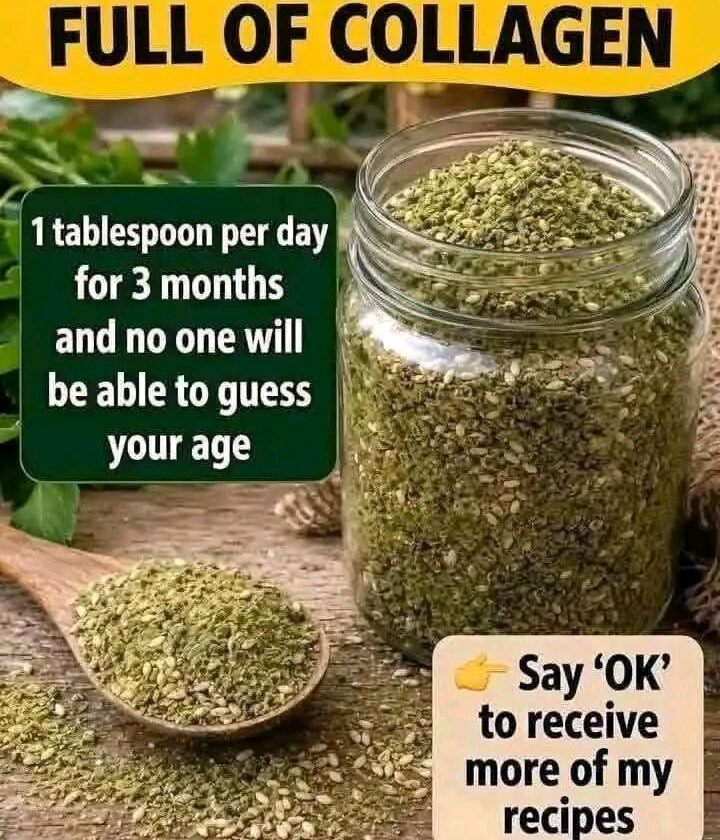
The image suggests taking one tablespoon of a green seed mixture each day for three months and describes it as being “full of collagen.”
That wording is stronger than the available evidence supports.
A food does not automatically contain collagen simply because it may provide nutrients involved in collagen production.
Collagen is a protein naturally produced by the body. Vitamin C is required for collagen biosynthesis, while adequate protein and an overall nutritious diet provide the building blocks and nutrients needed for normal body functions.
Because the exact ingredients in the pictured mixture cannot be identified reliably from the photograph, the recipe below uses a seed-based nutritional blend rather than claiming that the pictured powder is a proven collagen treatment.
It can be incorporated into a balanced diet, but it should not be presented as a substitute for medical treatment, collagen supplements, or professional skin care.
Recipe Overview
| Category | Details |
|---|---|
| Recipe Name | Homemade Collagen-Supporting Seed Blend |
| Preparation Time | 10 minutes |
| Toasting Time | 3–5 minutes |
| Blending Time | 1–2 minutes |
| Total Time | About 15 minutes |
| Yield | Approximately 1 cup |
| Serving Size | 1 tablespoon |
| Category | Nutrient-Dense Seed Blend |
| Storage | Airtight container in the refrigerator |
| Best Used Within | About 2–3 weeks for best freshness |
| Main Purpose | Convenient addition to a balanced diet |
Why You’ll Love This Recipe
This homemade seed blend is an easy way to add a variety of nutrient-dense seeds to everyday meals.
Instead of relying on a single ingredient marketed as a “natural collagen booster,” this recipe focuses on overall nutrition and provides a simple topping that can be incorporated into breakfast, snacks, smoothies, and yogurt.
The blend is also versatile. A tablespoon can be mixed into oatmeal, sprinkled over yogurt, added to a smoothie, or incorporated into homemade energy bites.
This makes it easy to build a consistent healthy eating routine without complicated preparation.
For people interested in healthy aging and skin health, nutrition is only one part of the picture.
The National Institute on Aging recommends a healthy diet, hydration, sun protection, and avoiding smoking as part of maintaining healthier skin as you age.
Ingredients
Main Seed Blend
| Ingredient | Amount |
|---|---|
| Pumpkin seeds, raw | ½ cup |
| Sunflower seeds, raw | ¼ cup |
| Ground flaxseed | 2 tablespoons |
| Chia seeds | 2 tablespoons |
| Sesame seeds | 2 tablespoons |
Optional Additions
| Ingredient | Amount |
|---|---|
| Ground almonds | 2 tablespoons |
| Hemp hearts | 2 tablespoons |
| Cinnamon | ½ teaspoon |
| Unsweetened coconut flakes | 1 tablespoon |
Optional Vitamin C Pairing
| Ingredient | Suggested Amount |
|---|---|
| Fresh strawberries | ½ cup |
| Kiwi | 1 small |
| Orange | ½ medium |
| Red bell pepper | A few slices |
Vitamin C is particularly relevant because the body requires it to make collagen.
Step-by-Step Instructions
1. Prepare the Seeds
Measure the pumpkin seeds, sunflower seeds, sesame seeds, chia seeds, and flaxseed.
Check them carefully and remove any foreign material or damaged pieces.
2. Lightly Toast the Whole Seeds
Place the pumpkin seeds, sunflower seeds, and sesame seeds in a dry skillet.
Heat over low to medium heat for approximately 3–5 minutes, stirring frequently.
The goal is a light toast rather than deep browning. Once the seeds become fragrant, remove them from the heat.
3. Cool Completely
Transfer the toasted seeds to a plate or bowl and allow them to cool completely for approximately 10 minutes.
Do not grind the seeds while they are still very hot.
4. Grind the Mixture
Place the cooled pumpkin seeds, sunflower seeds, sesame seeds, flaxseed, and chia seeds in a clean food processor or spice grinder.
Pulse for approximately 20–30 seconds, stopping several times to check the texture.
For a slightly coarse blend, stop when the seeds are finely chopped. For a powder-like consistency, continue briefly, but avoid over-processing into a thick seed butter.
5. Add Optional Ingredients
If desired, add cinnamon, ground almonds, hemp hearts, or unsweetened coconut.
Pulse for another 5–10 seconds to combine.
6. Transfer to a Container
Place the finished mixture into a clean, dry, airtight glass container.
Label the container with the preparation date.
7. Serve
Use approximately 1 tablespoon per serving.
You can add it to oatmeal, yogurt, smoothies, porridge, salads, or other foods.
Rather than treating the tablespoon as a guaranteed three-month anti-aging treatment, think of it as a convenient serving of seeds within an overall nutritious eating pattern.
Best Tips
Keep the heat low when toasting the seeds. High temperatures can quickly burn small seeds and create a bitter flavor. Gentle heating for a few minutes is enough to improve their aroma.
For maximum freshness, consider grinding only a small batch at a time. Ground seeds have more exposed surface area than whole seeds, so proper storage becomes particularly important.
If your goal is supporting normal collagen production, don’t focus exclusively on one “miracle” ingredient.
Vitamin C is required for collagen biosynthesis, so pairing the seed blend with fruits or vegetables that provide vitamin C makes nutritional sense.
Best Ingredient Options
Pumpkin seeds: These provide a crunchy, nutty foundation for the blend.
Flaxseed: Ground flaxseed works particularly well because whole flaxseed can pass through the digestive system without being fully broken down.
Chia seeds: These add texture and can be used without cooking.
Sesame seeds: They contribute a distinctive nutty flavor.
Sunflower seeds: These add a mild flavor and complement the stronger-tasting seeds.
Hemp hearts: If available, hemp hearts can be included for additional plant protein and a softer texture.
Recipe Variations
For a breakfast blend, add cinnamon and a small amount of unsweetened coconut. This version works particularly well over oatmeal or Greek yogurt.
For a smoothie blend, keep the mixture finely ground so that it incorporates more easily into the drink. Combine one tablespoon with fruit, yogurt or milk, and your preferred smoothie ingredients.
For a savory version, leave out the cinnamon and coconut and add a small amount of dried herbs. Sprinkle the finished mixture over salads, roasted vegetables, soups, or grain bowls.
What to Serve With
This seed blend works especially well with Greek yogurt and fresh berries. Berries can add vitamin C while yogurt provides protein, creating a more nutritionally balanced snack.
It can also be added to oatmeal with sliced kiwi, strawberries, or oranges. Vitamin C is needed for collagen production, so including vitamin-C-rich foods in the broader diet is more meaningful than claiming that a seed mixture itself is “full of collagen.”
For lunch or dinner, sprinkle a tablespoon over a green salad, roasted vegetables, quinoa, or a grain bowl.
Make-Ahead Instructions
Prepare the seed mixture in advance and divide it into small portions if you want convenient servings throughout the week.
A tablespoon-sized portion can be measured into small containers so it is ready to add to breakfast or smoothies.
For the freshest flavor, avoid preparing an unnecessarily large batch.
Storage
Transfer the finished blend to an airtight container and keep it in the refrigerator.
Because the recipe contains ground seeds, refrigeration is preferable to leaving a large batch at room temperature for an extended period.
Always use a clean, dry spoon when removing portions from the container.
Discard the mixture if you notice an unpleasant rancid smell, significant moisture, mold, or an unusual taste.
Reheating
This recipe does not require reheating.
If you want to add it to warm oatmeal or porridge, simply sprinkle the desired amount over the finished dish.
Avoid heating the entire seed mixture repeatedly.
Freezing
For longer storage, the seed blend can be divided into small freezer-safe portions and frozen.
Place the portions in airtight freezer containers or bags and label them with the date.
Allow a portion to come to room temperature before using, or add it directly to a smoothie if appropriate.
Common Mistakes to Avoid
The biggest mistake is assuming that a seed mixture literally contains collagen. Collagen is a protein produced by the body, and vitamin C is required for its biosynthesis.
The phrase “full of collagen” in the original image should therefore be understood as a marketing-style claim rather than established nutritional fact.
Another mistake is expecting visible changes in wrinkles or biological age simply from eating one tablespoon daily for three months.
There is no established guarantee that this specific homemade mixture will make someone look younger or make their age impossible to guess.
Avoid using excessive amounts simply because the recipe is made from nutritious ingredients. Seeds can be energy-dense, so portion size matters when they are added to an otherwise complete diet.
Finally, don’t use this recipe as a replacement for professional medical care or evidence-based treatments. Nutrition can support general health, but it cannot guarantee a particular cosmetic or medical outcome.
Nutrition Estimate
The exact nutrition will vary according to the seeds and quantities used. The following is an approximate estimate for 1 tablespoon of the basic blend.
| Nutrient | Approximate Amount |
|---|---|
| Calories | 55–70 kcal |
| Protein | 2–3 g |
| Total Fat | 4–6 g |
| Carbohydrates | 2–3 g |
| Fiber | 1–2 g |
| Added Sugar | 0 g |
| Sodium | Very low |
These values are estimates and will change depending on the brands and exact proportions used.
Frequently Asked Questions
Is this seed mixture full of collagen?
No. Seeds are not equivalent to a collagen supplement, and the mixture should not be described as containing large amounts of collagen.
The body produces collagen itself. Vitamin C is an essential nutrient required for collagen biosynthesis.
Can one tablespoon a day make me look younger?
There is no reliable evidence that this particular recipe will make someone look younger or prevent normal aging. It can be part of a nutritious diet, but healthy skin depends on many factors.
Does diet affect skin aging?
Nutrition is one factor among several. The National Institute on Aging recommends healthy eating, hydration, sun protection, and avoiding smoking as part of maintaining healthier skin as you age.
What foods help the body make collagen?
Vitamin C-rich foods are particularly relevant because vitamin C is required for collagen production. Examples include citrus fruits, strawberries, peppers, tomatoes, and other fruits and vegetables containing vitamin C.
Can I take this instead of collagen supplements?
Not necessarily. A seed mixture and a collagen supplement are different products with different compositions. If you’re considering dietary supplements for a specific reason, discuss the options with a doctor or qualified healthcare professional.
Can I eat this every day?
For most people, a tablespoon used as part of a varied diet can be a convenient way to include seeds. However, individual dietary needs and allergies differ.
Can I use this recipe for weight loss?
This mixture should not be considered a weight-loss treatment. Seeds can be nutritious but are also relatively calorie-dense. Portion size and overall calorie intake matter when managing body weight.
Is this recipe suitable for everyone?
No single food is suitable for everyone. People with seed or nut allergies, certain digestive conditions, or specific dietary restrictions should review the ingredients carefully and seek professional advice when appropriate.
Final Thoughts
This homemade seed blend is best viewed as a nutrient-dense food topping, not a miracle anti-aging remedy. It can add variety to breakfasts, smoothies, yogurt, salads, and other meals while fitting into a balanced eating pattern.
The original image’s claim that one tablespoon for three months will make nobody able to guess your age has not been established by clinical evidence.
For healthy skin and healthy aging, a broader approach—including a balanced diet, adequate hydration, sun protection, and appropriate professional care—is more sensible.
For readers searching for collagen supplements, skin health, healthy aging, nutritional supplements, anti-aging skincare, or natural beauty, it’s important to distinguish evidence-based information from promotional claims.
Vitamin C’s role in normal collagen production is well established, but no single homemade recipe can guarantee a particular cosmetic result.
⚠️This recipe may not be suitable for everyone, so it is advisable to consult a doctor.