Guava Leaf Tea for Eye Wellness: A Simple Homemade Herbal Drink, What It Can and Cannot Do for Cataracts, and How to Prepare It Safely
Introduction
Guava leaves have long been used in traditional food and herbal preparations, and guava leaf tea is a simple beverage that can be prepared at home.
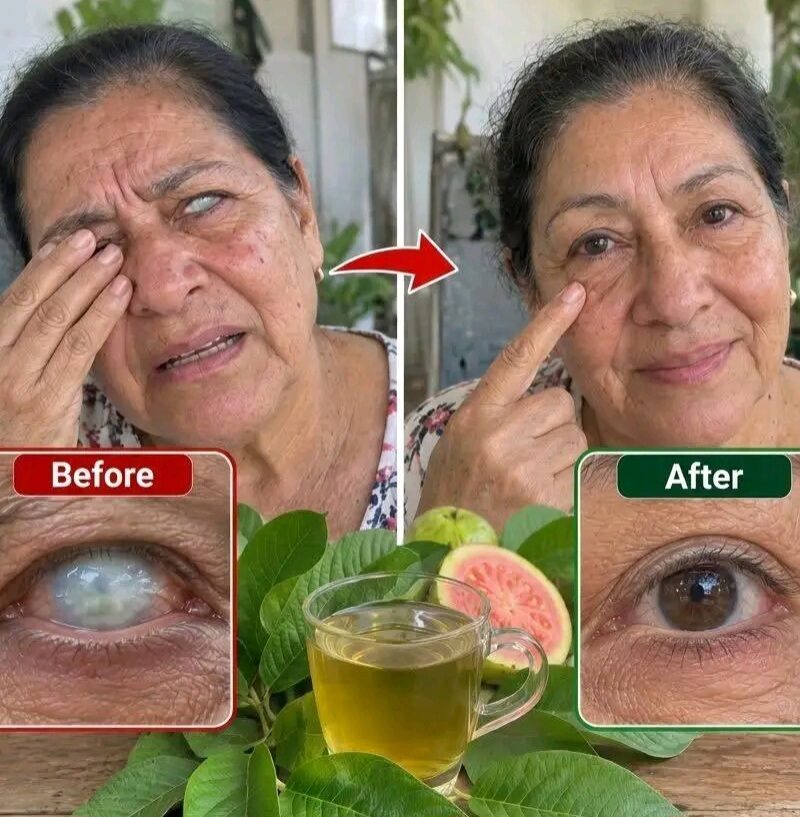
The image associated with this recipe claims that guava leaves can clear cataracts and restore vision in just three days. However, that claim should not be presented as an established medical treatment.
A cataract is clouding of the eye’s natural lens. According to the National Eye Institute, cataracts can cause blurry or hazy vision, faded colors, glare, and difficulty seeing at night.
When a cataract significantly affects daily activities, cataract surgery is the established treatment that removes the cloudy lens.
This article therefore treats guava leaf tea as a traditional herbal beverage rather than a cataract cure. There is no good clinical evidence establishing that drinking guava leaf tea can remove cataracts or restore vision within three days.
This distinction is important for anyone searching for natural eye care, cataract treatment, or ways to improve vision naturally.
Recipe Overview
| Category | Details |
|---|---|
| Recipe Name | Homemade Guava Leaf Tea |
| Preparation Time | 5 minutes |
| Simmering Time | 8–10 minutes |
| Cooling Time | 5–10 minutes |
| Total Time | About 20 minutes |
| Yield | 2 cups |
| Category | Herbal Beverage |
| Main Ingredient | Fresh guava leaves |
| Flavor | Mild, earthy and herbal |
| Serving | Warm or chilled |
| Important Note | Not a proven treatment for cataracts or vision loss |
Why You’ll Love This Recipe
Guava leaf tea is an uncomplicated homemade beverage requiring only a few ingredients and basic kitchen equipment. It has a naturally herbal flavor and can be enjoyed warm or chilled as part of a balanced lifestyle.
It is also easy to customize. You can add a small amount of lemon, ginger, or cinnamon for flavor, depending on your preferences.
Most importantly, this recipe should be viewed as a beverage rather than a medical remedy. If you are experiencing blurry vision, cloudy vision, flashes, eye pain, or other changes in eyesight, an eye examination is much more appropriate than relying on an herbal drink.
Ingredients
Main Ingredients
| Ingredient | Amount |
|---|---|
| Fresh guava leaves | 6–8 medium leaves |
| Water | 2 cups (480 ml) |
| Lemon juice | 1 teaspoon, optional |
| Honey | 1 teaspoon, optional |
Optional Flavor Ingredients
| Ingredient | Amount |
|---|---|
| Fresh ginger | 2–3 thin slices |
| Cinnamon stick | 1 small piece |
| Fresh mint | 3–4 leaves |
Use clean, healthy-looking guava leaves. Wash them thoroughly under running water before preparing the tea.
Step-by-Step Instructions
1. Wash the Guava Leaves
Rinse 6–8 fresh guava leaves thoroughly under cool running water. Gently rub the surfaces to remove visible dirt or debris.
Pat the leaves dry with a clean kitchen towel.
2. Prepare the Water
Pour 2 cups of water into a small saucepan and bring it to a gentle boil over medium-high heat.
3. Add the Leaves
Reduce the heat and add the washed guava leaves to the hot water.
If desired, add a few slices of fresh ginger or a small cinnamon stick for additional flavor.
4. Simmer
Allow the mixture to simmer gently for approximately 8–10 minutes.
Avoid aggressively boiling the leaves for a long period because this can produce a stronger, more bitter beverage.
5. Strain
Remove the saucepan from the heat.
Allow the tea to cool for several minutes, then strain it through a fine-mesh strainer into a clean cup.
6. Add Flavor
If you enjoy a brighter flavor, add approximately 1 teaspoon of lemon juice.
For sweetness, you can add a small amount of honey once the drink has cooled enough to your preferred serving temperature.
7. Serve
Enjoy the tea warm, or refrigerate it and serve it chilled.
Do not put homemade guava-leaf tea into the eyes. An herbal tea prepared in a kitchen is not sterile and is not an appropriate substitute for medically formulated eye drops.
Best Tips
Choose fresh, undamaged guava leaves and wash them carefully before preparation. Using clean utensils and fresh water will help produce a better-quality homemade beverage.
Start with a relatively mild preparation if you have never tried guava leaf tea before. The flavor can become quite earthy or bitter when the leaves are used in large quantities or boiled for too long.
For people interested in eye health, remember that an herbal beverage and an eye treatment are two very different things.
A healthy diet, appropriate eye protection, and regular eye examinations are more appropriate components of an overall eye-care routine.
Best Ingredient Options
Fresh guava leaves: Fresh, clean leaves are the simplest option for this recipe. Avoid leaves that have visible mold, unusual discoloration, chemical residue, or signs of insect damage.
Lemon: A small amount of fresh lemon juice gives the tea a lighter, more refreshing flavor.
Ginger: Fresh ginger adds warmth and spice without requiring additional sugar.
Honey: A teaspoon can soften the bitterness, although it is completely optional.
Recipe Variations
For a refreshing summer drink, prepare the tea as described, allow it to cool completely, and serve it over ice with a slice of lemon.
For a warmer herbal beverage, combine the guava leaves with a few thin slices of ginger. The ginger gives the drink a more pronounced flavor and works especially well when the tea is served warm.
You can also prepare a simple mint variation by adding a few fresh mint leaves after cooking. Allow the mint to steep for several minutes before straining.
These variations change the flavor of the beverage; they should not be interpreted as additional treatments for cataracts or vision problems.
What to Serve With
Guava leaf tea can be served alongside a light breakfast such as oatmeal, whole-grain toast, fresh fruit, or yogurt.
For an afternoon beverage, it pairs well with nuts, fruit, a small sandwich, or a homemade snack.
If you are drinking it as part of an eye-health-conscious lifestyle, focus on an overall balanced eating pattern rather than expecting one drink to prevent or treat an eye condition.
Make-Ahead Instructions
You can prepare a larger batch and refrigerate it for later consumption.
Allow the tea to cool before transferring it to a clean, covered container. Refrigerate promptly rather than leaving the beverage at room temperature for an extended period.
For the best flavor, prepare smaller batches rather than storing homemade herbal tea for many days.
Storage
Store leftover guava leaf tea in a clean, covered container in the refrigerator.
Discard the beverage if it develops an unusual smell, appearance, or flavor.
Do not store the leaves in the tea indefinitely. Strain them out after brewing.
Reheating
To enjoy refrigerated guava leaf tea warm, gently heat the desired amount in a saucepan or microwave-safe container.
Warm it until comfortable to drink rather than repeatedly boiling it.
You can also enjoy the tea cold over ice.
Freezing
Guava leaf tea can technically be frozen in small portions, although freezing is not necessary for a small batch.
If you choose to freeze it, use a freezer-safe container and leave sufficient space for expansion. Thaw it in the refrigerator and consume it promptly after thawing.
Common Mistakes to Avoid
One of the biggest mistakes is treating guava leaf tea as a proven cataract treatment. Current guidance from the National Eye Institute states that surgery is the only way to get rid of an existing cataract.
Another mistake is putting homemade tea directly into the eyes. Homemade preparations are not sterile, and introducing non-sterile liquids into the eye can create unnecessary risks.
Avoid believing dramatic claims such as « clear cataracts in three days » or « restore vision naturally overnight » without reliable clinical evidence. Cataracts involve clouding of the eye’s lens, and diagnosis requires an eye examination.
Finally, do not postpone professional eye care because you are trying an herbal beverage. Vision changes can have many causes, and an eye professional can determine whether cataracts or another eye condition is responsible.
Nutrition Estimate
The following estimate assumes the recipe is made with guava leaves and water only.
| Nutrient | Approximate Amount Per Cup |
|---|---|
| Calories | Very low |
| Protein | Minimal |
| Fat | Minimal |
| Carbohydrates | Minimal |
| Fiber | Minimal |
| Added Sugar | 0 g |
| Sodium | Very low |
Adding honey will increase the calorie and carbohydrate content.
Because the leaves are strained out rather than eaten, the nutritional contribution of the finished drink is difficult to estimate precisely.
Frequently Asked Questions
Can guava leaves clear cataracts?
There is currently no established clinical evidence that guava leaves or guava leaf tea can clear cataracts. A cataract is clouding of the eye’s lens, and the established treatment for removing a cataract is surgery.
Can guava leaf tea restore vision in three days?
There is no reliable evidence establishing that guava leaf tea can restore vision in three days. The before-and-after photographs and claims shown in the original image should not be treated as clinical proof.
Is guava leaf tea good for eye health?
It can be consumed as a traditional herbal beverage, but that does not establish it as a treatment for eye disease. For eye health, appropriate examinations and evidence-based care are more important than relying on a single herbal drink.
What is the proven treatment for cataracts?
Cataract surgery is the established treatment that removes the cloudy natural lens and replaces it with an artificial intraocular lens. Surgery is generally considered when cataracts interfere with activities such as reading, driving, or watching television.
Can cataracts go away naturally?
An existing cataract cannot currently be reliably removed with a home remedy or herbal tea. The American Academy of Ophthalmology states that cataracts can be removed only with surgery.
What are common cataract symptoms?
Common symptoms include blurry or cloudy vision, faded colors, increased sensitivity to light, difficulty seeing at night, glare, and sometimes double or ghosted vision in one eye.
When should I see an eye doctor?
You should arrange an eye examination if you notice persistent changes in your vision, including worsening blurriness, difficulty seeing at night, increased glare, faded colors, or other unusual changes.
Sudden vision loss, severe eye pain, or other sudden serious changes should receive prompt medical attention rather than being treated with a home remedy.
Can I use guava leaf tea as eye drops?
No. Do not put homemade guava leaf tea into your eyes. It is not sterile and has not been established as a safe ophthalmic treatment.
What can I do to support eye health?
Regular eye examinations, protection from ultraviolet light, avoiding smoking, managing conditions such as diabetes, and following appropriate medical advice are practical measures discussed by major ophthalmology organizations.
Final Thoughts
Guava leaf tea can be prepared as a simple homemade herbal beverage, but it should not be marketed as a natural Botox-like treatment for the eyes or as a way to remove cataracts in three days. The claim shown in the image goes beyond what current medical evidence supports.
If you are researching cataract treatment, eye health, vision correction, or cataract surgery, speak with an ophthalmologist or other qualified eye-care professional. Cataracts are treatable, and an eye examination can determine whether cataracts are actually responsible for changes in your vision.
⚠️This recipe may not be suitable for everyone, so it is advisable to consult a doctor.