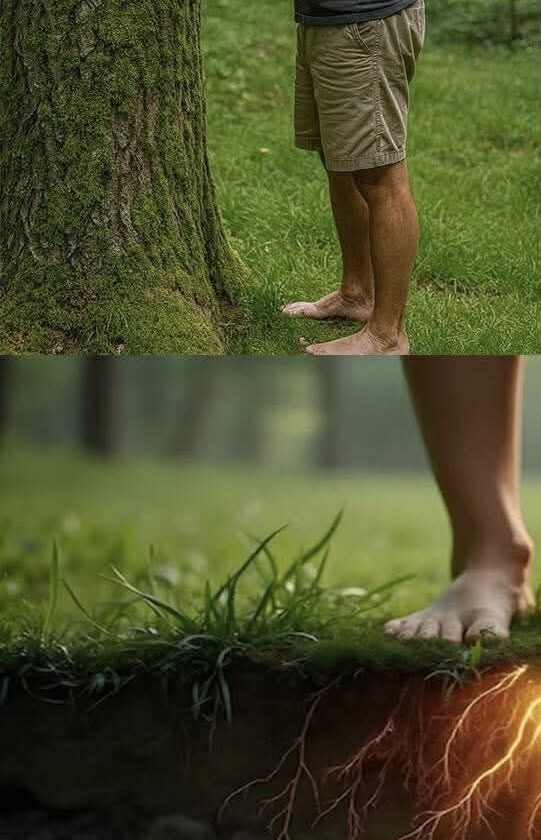
Earthing and Tree Hugging: Connecting with Nature’s Energy
The practice of touching trees while barefoot combines Earthing (grounding) with nature therapy. It suggests that direct physical contact with the Earth and its flora can balance the body’s electrical state and improve mental well-being.
Ingredients
A living tree: Preferably in a quiet, natural setting like a forest or park.
Bare feet: To ensure direct skin-to-ground contact for grounding.
Open hands: For making physical contact with the bark.
Quiet focus: To engage in mindfulness during the process.
Instructions
Find a Location: Locate a healthy tree in an area where you feel safe and undisturbed.
Remove Footwear: Take off your shoes and socks to allow your feet to make direct contact with the grass, soil, or moss.
Approach the Tree: Walk slowly toward the tree, noticing the sensation of the ground beneath your feet.
Establish Contact: Place your palms flat against the bark or wrap your arms around the trunk in a “hug.”
Breathe: Close your eyes and take deep, slow breaths, focusing on the connection between your body and the tree.
How to Make the Connection
Grounding: Stand firmly on the ground to allow the Earth’s natural electrons to flow into your body, a process believed to neutralize free radicals.
Tactile Engagement: Feel the texture of the bark and the temperature of the tree to ground your senses in the present moment.
Duration: Maintain this contact for at least 10 to 20 minutes to fully experience the calming effects on the nervous system.
Release: When finished, step away slowly and take a moment to acknowledge how your body feels after the session.
Variations
Seated Grounding: Sit with your back against the trunk and your feet flat on the earth to combine spinal support with grounding.
Forest Bathing (Shinrin-yoku): Incorporate the practice into a slow, meditative walk through the woods rather than staying with a single tree.
Root Visualization: While standing barefoot, imagine your own energy extending like roots into the soil to meet the tree’s root system.
Tips
Safety First: Ensure the area is free of sharp objects, stinging insects, or plants like poison ivy before going barefoot.
Choose the Right Tree: Avoid trees with loose or sharp peeling bark that might cause skin irritation.
Consistent Practice: Like any mindfulness exercise, the benefits of grounding are often more noticeable when practiced regularly.
Morning Sessions: Practicing in the morning can help set a calm, grounded tone for the rest of your day.
Conclusion
Touching a tree while barefoot is a simple yet profound way to reconnect with the natural world and reduce the stresses of modern life. By combining the physical benefits of grounding with the emotional peace of nature, this practice offers a holistic approach to daily wellness.
⚠️This recipe may not be suitable for everyone, so it is advisable to consult a doctor.