Orange Ginger Turmeric Collagen Jelly Recipe
A bright, refreshing gelatin dessert made with orange juice, ginger, turmeric, lemon, and unflavored gelatin.
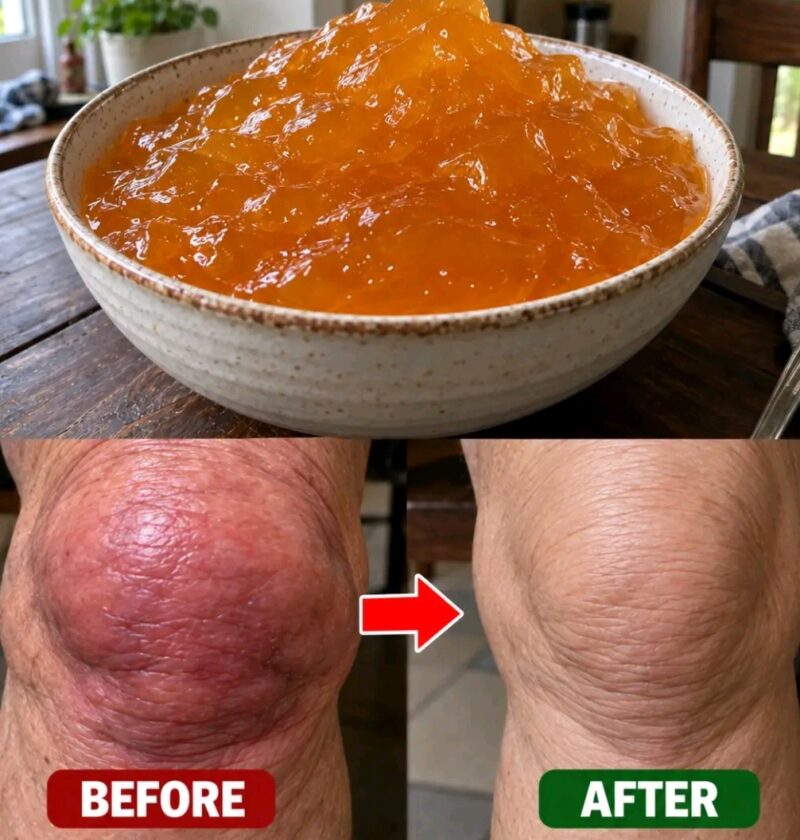
It has the glossy, spoonable texture shown in the image and can be enjoyed as a simple high-protein snack.
Important note: The image makes claims that one food can “rebuild destroyed knee cartilage” or eliminate severe knee pain within seven hours.
Those claims are not supported by good clinical evidence. Collagen research has found possible improvements in osteoarthritis pain and function over weeks or months, not hours, and results are not a guarantee for an individual.
This recipe should therefore be presented as a nutritious food, not as a treatment for arthritis or damaged cartilage.
Introduction
If you are looking for an easy homemade snack with a combination of citrus, ginger, turmeric, and gelatin, this Orange Ginger Turmeric Collagen Jelly is a delicious option.
The orange juice gives it a naturally fruity flavor, while fresh ginger and turmeric add warmth and color. Unflavored gelatin creates the soft, jiggly texture and contributes protein to the recipe.
This recipe is particularly appealing for anyone interested in healthy aging, high-protein snacks, joint-friendly foods, and simple wellness recipes.
While nutrition can support an overall healthy lifestyle, no single recipe can restore damaged cartilage or replace medical treatment for persistent knee pain.
Research on collagen-derived products suggests potential benefits for osteoarthritis symptoms, but studies generally involve regular intake over much longer periods than seven hours.
Recipe Overview
| Category | Details |
|---|---|
| Recipe Name | Orange Ginger Turmeric Collagen Jelly |
| Prep Time | 10 minutes |
| Chilling Time | 3–4 hours |
| Total Time | About 3 hours 10 minutes |
| Servings | 6 |
| Difficulty | Easy |
| Texture | Soft, firm, and jiggly |
| Flavor | Citrus, lightly spicy, and earthy |
| Main Ingredient | Orange juice and unflavored gelatin |
| Cooking Method | Stovetop + refrigeration |
| Best For | Snack, light dessert, breakfast accompaniment |
| Dietary Style | Gluten-free |
Why You’ll Love This Recipe
This homemade orange gelatin dessert is simple enough for beginners but attractive enough to serve as a refreshing after-dinner treat. The combination of fresh orange juice, ginger, turmeric, and lemon creates a vibrant flavor without requiring complicated cooking techniques.
The gelatin gives the recipe its characteristic soft texture while adding protein. Because the recipe uses real citrus juice rather than a flavored gelatin mix, you can control the sweetness and adjust the flavor according to your preference.
It is also convenient for meal preparation because you can make several portions at once and keep them refrigerated. For people interested in wellness recipes, healthy aging, protein-rich foods, and practical nutrition, this is an easy addition to a balanced eating pattern.
Ingredients
Main Ingredients
| Ingredient | Amount |
|---|---|
| Fresh orange juice | 2 cups |
| Unflavored powdered gelatin | 3 tablespoons |
| Fresh ginger, finely grated | 1 tablespoon |
| Ground turmeric | 1 teaspoon |
| Fresh lemon juice | 1 tablespoon |
| Honey | 1–2 tablespoons |
| Water | ½ cup |
| Black pepper | ⅛ teaspoon |
| Orange zest | 1 teaspoon |
Optional Ingredients
| Ingredient | Amount | Purpose |
|---|---|---|
| Chia seeds | 1 tablespoon | Adds texture and fiber |
| Cinnamon | ¼ teaspoon | Adds warmth |
| Vanilla extract | ½ teaspoon | Softens the citrus flavor |
| Fresh orange segments | ½ cup | Adds texture |
| Greek yogurt | For serving | Adds extra protein |
Step-by-Step Instructions
1. Prepare the gelatin
Pour ½ cup cold water into a small bowl. Sprinkle the gelatin evenly over the water and allow it to sit undisturbed for 5 minutes. This process, called blooming, helps the gelatin dissolve smoothly.
2. Warm the orange mixture
Pour 1½ cups of the orange juice into a saucepan. Add the grated ginger, turmeric, orange zest, honey, and black pepper.
Heat over low to medium heat for about 3–4 minutes, stirring occasionally. Do not bring the mixture to a rolling boil.
3. Add the bloomed gelatin
Remove the saucepan from the heat. Add the bloomed gelatin and whisk continuously for 1–2 minutes, until completely dissolved.
4. Add the remaining citrus
Stir in the remaining ½ cup orange juice and 1 tablespoon lemon juice. Adding some juice after heating helps maintain a fresher citrus flavor.
Taste the mixture and add another teaspoon of honey if you prefer a sweeter jelly.
5. Strain if desired
For an especially smooth texture, pour the mixture through a fine-mesh strainer to remove pieces of ginger and orange zest.
If you enjoy a more rustic texture, you can leave them in.
6. Pour into containers
Divide the mixture between six small glass jars, ramekins, or one medium glass container.
Allow the mixture to cool at room temperature for approximately 15–20 minutes.
7. Refrigerate
Cover and refrigerate for 3–4 hours, or until completely set.
For the firmest texture, refrigerate overnight.
8. Serve
Serve the jelly cold. You can garnish each portion with a little orange zest, fresh orange, or a spoonful of plain Greek yogurt.
Best Tips
Use fresh orange juice whenever possible because it gives the jelly a brighter and more natural flavor. If your oranges are particularly sweet, reduce the honey rather than making the recipe overly sugary.
The most important technique is blooming the gelatin before adding it to the warm liquid. Skipping this step can leave small gelatin granules throughout the finished dessert.
Avoid boiling the gelatin mixture aggressively. Gentle heating is sufficient to dissolve the gelatin and helps preserve the fresh flavor of the citrus.
For a stronger ginger flavor, increase the fresh ginger to 1½ tablespoons. If you prefer a milder flavor, reduce it to 2 teaspoons.
Best Ingredient Options
Orange juice: Freshly squeezed orange juice gives the best flavor, but high-quality 100% orange juice can also be used.
Gelatin: Use plain, unflavored powdered gelatin. Avoid sweetened flavored gelatin because it will change both the flavor and texture.
Ginger: Freshly grated ginger provides a stronger and fresher taste than powdered ginger.
Turmeric: Ground turmeric is convenient and works well in this recipe. Fresh turmeric can also be used, although it may produce a stronger earthy flavor.
Honey: Honey adds sweetness, but maple syrup or another preferred sweetener can be substituted.
Recipe Variations
For a creamier version, serve the chilled jelly with plain Greek yogurt. The combination creates a dessert with more protein and a creamy contrast to the citrus jelly.
For a tropical variation, replace ½ cup of the orange juice with pineapple juice. You can also add a small amount of finely chopped pineapple after the gelatin mixture has cooled slightly.
For a lemon-ginger version, replace part of the orange juice with additional lemon juice and increase the honey slightly to balance the acidity.
For a berry version, pour the jelly over fresh blueberries or sliced strawberries before refrigerating.
What to Serve With
This orange gelatin pairs well with plain Greek yogurt, fresh berries, sliced oranges, oatmeal, or a small handful of nuts. For breakfast, it can be served as a light side alongside eggs and whole-grain toast.
As a dessert, serve it with unsweetened yogurt and fresh fruit rather than a heavy cream-based topping.
Make-Ahead Instructions
Prepare the jelly up to 2 days ahead and keep it covered in the refrigerator.
If preparing it for a gathering, divide it into individual glass containers before chilling. This makes serving easier and keeps the portions consistent.
Storage
Store the finished jelly in an airtight container or tightly covered individual jars in the refrigerator.
For best quality, consume within 4–5 days.
Do not leave the gelatin dessert at room temperature for extended periods.
Reheating
This recipe is designed to be eaten cold, so reheating is not recommended.
If the jelly becomes too firm after refrigeration, allow it to sit at room temperature for approximately 5–10 minutes before serving.
Freezing
Freezing is possible, but it can noticeably change the texture of gelatin desserts. The jelly may become watery or slightly grainy after thawing.
For the best texture, prepare it fresh and refrigerate rather than freeze it.
Common Mistakes to Avoid
Do not add dry gelatin directly to a large amount of hot liquid. Blooming it first allows the gelatin to hydrate properly and produces a smoother final texture.
Avoid boiling the mixture for a long time. High heat and prolonged cooking are unnecessary for this recipe and can affect the texture and fresh citrus flavor.
Do not use too much turmeric. A small amount provides color and earthy flavor, while excessive turmeric can make the jelly bitter.
Another common mistake is cutting the chilling time short. The jelly needs several hours in the refrigerator to fully set, so giving it only 30–60 minutes may result in a soft or partially liquid center.
Finally, do not present this food as a medical treatment. Although research has investigated collagen and osteoarthritis symptoms, clinical studies do not establish that this recipe can rebuild destroyed cartilage or eliminate knee pain within hours.
Nutrition Estimate
Approximate values per serving, assuming 6 servings and 1 tablespoon honey.
| Nutrient | Approximate Amount |
|---|---|
| Calories | 90 kcal |
| Protein | 7 g |
| Carbohydrates | 14 g |
| Sugar | 11 g |
| Fat | 0 g |
| Fiber | 0.5 g |
| Sodium | 5 mg |
| Vitamin C | ~45 mg |
Nutrition will vary depending on the orange juice, honey, gelatin brand, and serving size.
Frequently Asked Questions
Does this recipe rebuild knee cartilage?
There is no good evidence that this particular recipe can rebuild damaged knee cartilage.
Collagen-derived products have been studied for osteoarthritis symptoms, with some systematic reviews finding improvements in pain and function, but these studies generally involve supplementation over weeks or months rather than hours.
Can this recipe cure arthritis?
No. This is a food recipe, not a treatment or cure for arthritis. People with persistent knee pain, swelling, instability, or difficulty walking should discuss their symptoms with an appropriate healthcare professional.
Is gelatin a source of collagen?
Gelatin is derived from collagen and provides collagen-related proteins and amino acids. However, eating gelatin does not mean that it directly travels to a damaged knee and rebuilds cartilage.
Why are ginger and turmeric included?
They contribute flavor, color, and compounds that have been studied for potential health effects. They should not, however, be described as guaranteed treatments for joint pain.
Can I make this without honey?
Yes. Simply reduce or omit the honey according to your taste. You can also use another sweetener if desired.
Can I use bottled orange juice?
Yes. Choose 100% orange juice without added sugar for the closest result to fresh juice.
Is this recipe suitable for older adults?
The ingredients are ordinary foods, but suitability depends on an individual’s allergies, dietary restrictions, medications, and health conditions. Older adults with medical conditions should discuss significant dietary changes or supplements with their healthcare professional.
What actually helps with knee osteoarthritis?
Management can involve several approaches depending on the individual. Dietary quality and maintaining a healthy weight can support joint health, while physical activity and other evidence-based treatments may help manage symptoms. The American College of Rheumatology/Arthritis Foundation guideline strongly recommends weight loss for people with knee or hip osteoarthritis who are overweight or obese.
Can I eat this every day?
It can be included as part of a balanced diet if it fits your nutritional needs. However, eating this jelly every day should not be considered a substitute for a varied diet or medical care.
Final Thoughts
This Orange Ginger Turmeric Collagen Jelly is a colorful, simple homemade recipe that combines citrus flavor with gelatin for a soft, protein-containing snack. It is easy to prepare in advance and works well as a light dessert, breakfast side, or refrigerated wellness snack.
Interest in joint health, collagen, healthy aging, anti-inflammatory foods, osteoarthritis nutrition, and high-protein foods continues to grow, but responsible nutrition content should distinguish promising research from proven medical treatment. Current evidence suggests that collagen-derived products may help some osteoarthritis symptoms, but that evidence does not support claims of rebuilding severely damaged cartilage or removing knee pain in seven hours.
⚠️This recipe may not be suitable for everyone, so it is advisable to consult a doctor.